
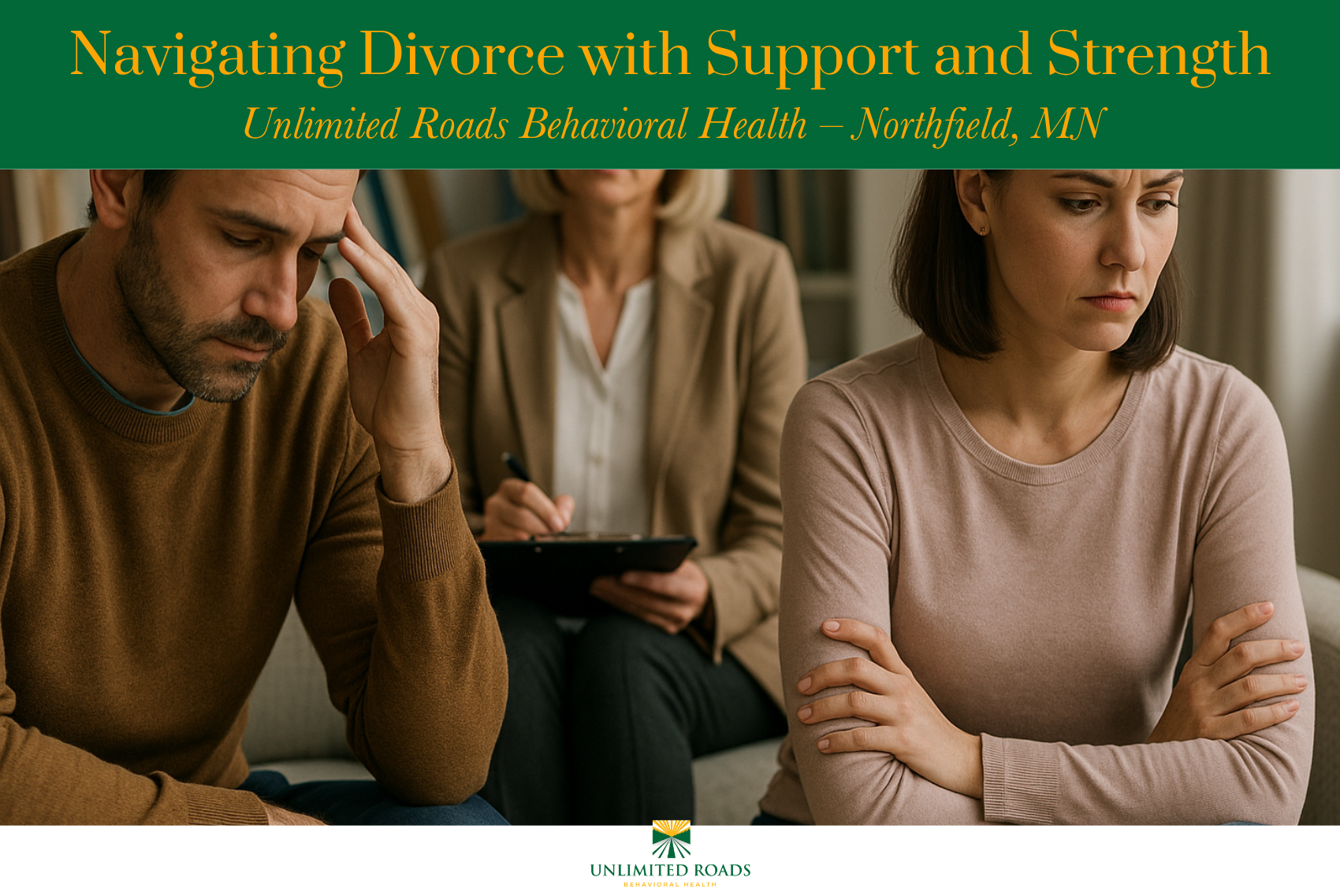
Divorce is more than a legal process—it’s an emotional earthquake. Even when it’s the “right” decision, it can shake your sense of identity, safety, and future. You might feel sadness, relief, anger, guilt, fear, or all of the above in a single day.
At Unlimited Roads Behavioral Health, we know that no two divorces are the same. Your story, your family, and your healing journey are uniquely yours. Our goal is to walk beside you as you navigate this major life transition, offering professional support, tools, and a safe place to process everything you’re going through.
The Emotional Impact of Divorce
Divorce can touch every part of life:
- Emotional: Grief, anxiety, depression, numbness, or emotional swings
- Physical: Trouble sleeping, low energy, headaches, changes in appetite
- Relational: Strained relationships with friends, extended family, or children
- Practical: Financial stress, housing changes, parenting schedules, legal steps
These reactions are normal, but that doesn’t mean you have to go through them alone. Therapy provides a steady, supportive space when everything else feels uncertain.
Common Emotional Experiences During Divorce
Many people going through divorce report:
- Grief and loss – mourning not just the relationship, but the future they imagined
- Anger and resentment – about betrayal, unmet needs, or lack of effort
- Guilt and shame – wondering if they “failed” or hurt their children
- Fear of the future – about finances, dating, parenting alone, or starting over
- Loneliness – even when they’re surrounded by people
If you see yourself in any of these, you’re not broken or “too emotional.” You’re human—and you’re going through a major life transition.
How Divorce Affects Children and Teens
Divorce can be confusing and scary for kids, even when parents are trying their best. Children and teens might:
- Act more clingy or withdrawn
- Have trouble in school or with friends
- Show anger, defiance, or outbursts
- Complain of stomachaches or headaches with no clear medical cause
- Worry that the divorce is “their fault”
Counseling can help children:
- Put words to their feelings
- Understand that they didn’t cause the divorce
- Feel heard and supported, without taking sides
- Learn coping skills for the changes in their daily lives
At Unlimited Roads Behavioral Health, we support both adults and children through the divorce process and beyond.
How Therapy Can Help During and After Divorce
Working with a mental health professional can help you:
- Process grief and loss in a healthy way
- Manage anxiety and depression so life feels more manageable
- Build coping skills for stress, conflict, and big emotions
- Improve communication with your ex-partner, especially when co-parenting
- Clarify your values and goals as you begin a new chapter
- Rebuild self-esteem and a sense of identity beyond the marriage
We create a safe, confidential space for you to talk openly—without judgment, pressure, or expectations.
Our Approach at Unlimited Roads Behavioral Health
At Unlimited Roads Behavioral Health, we focus on compassionate, practical support tailored to your needs. Depending on your situation, treatment may include:
- Individual therapy – for adults processing divorce, separation, or relationship transitions
- Child and teen therapy – to help younger family members navigate changes
- Family support – improving communication patterns and emotional safety
- Coping skills and stress management – including grounding, mindfulness, and emotion regulation tools
Our clinicians work collaboratively with you. We respect your values, cultural background, and personal circumstances as we help you find the path forward that feels right for you.
When to Seek Professional Help
Consider reaching out for support if you notice:
- Persistent sadness, hopelessness, or emotional numbness
- Constant anxiety or worry that interferes with daily life
- Trouble sleeping, eating, or concentrating
- Thoughts like “Everyone would be better off without me”
- Escalating conflicts with your ex-partner or family
- Changes in your child’s behavior, mood, or school performance
If you are having thoughts of self-harm or feel unsafe, please seek immediate help by contacting emergency services or a crisis line (for example, dialing 988 in the U.S. connects you to the Suicide & Crisis Lifeline).
Divorce & Mental Health: Frequently Asked Questions
1. Is it normal to feel relieved and devastated after divorce?
Yes. Many people experience mixed emotions, especially if the relationship was difficult for a long time. Relief that conflict is ending can exist right alongside grief for what’s been lost. Therapy can help you untangle these feelings and make sense of them without judging yourself.
2. How long does it take to “get over” a divorce?
There’s no standard timeline. Some people feel functional within months, while others take years to fully heal and rebuild. Factors like the length of the relationship, the level of conflict, financial changes, and whether children are involved all play a role. Our role is not to rush you, but to support you at each stage of the process.
3. How can I support my children during a divorce?
A few key steps can make a big difference:
- Be honest but age-appropriate. Share simple, reassuring explanations.
- Reassure them often. Let them know they are loved and not responsible for the divorce.
- Maintain routines when possible. Predictability helps children feel safe.
- Avoid putting them in the middle. Don’t use them as messengers or ask them to “choose sides.”
Working with a child therapist can provide both you and your children with tools for navigating these changes.
4. Should my child see a therapist even if they seem “fine”?
Not every child needs therapy during a divorce, but it can still be helpful. Sometimes kids try to protect their parents by pretending everything is okay. A therapist gives them a private, neutral space to share thoughts and feelings they might be afraid to say at home.
5. How do I know if I’m ready for therapy?
You don’t have to hit a breaking point to seek help. If you’re:
- Feeling overwhelmed
- Struggling to make decisions
- Repeating the same painful patterns
- Wanting a confidential space to talk
…then you’re ready. Therapy is not a sign of weakness—it’s a proactive step toward healing.
6. Can therapy help with co-parenting after divorce?
Absolutely. Therapy can help you:
- Create healthier communication habits with your co-parent
- Reduce conflict and tension around parenting schedules
- Focus on what’s best for your children
- Set and maintain clear boundaries
Even if your co-parent isn’t interested in therapy, individual work can help you respond differently and reduce stress.
7. What if my ex and I are still living in the same home?
Shared living during or after separation can be extremely stressful. Therapy can support you in:
- Managing day-to-day conflicts
- Setting boundaries around space, communication, and responsibilities
- Planning realistic next steps for housing, finances, and routines
We’ll help you identify what you can control and how to protect your emotional well-being in the meantime.
8. Is it too late for therapy if the divorce is already finalized?
Not at all. Many people seek therapy after the legal process is over, when emotions finally have space to surface. You might be ready to explore:
- Rebuilding your identity
- Processing lingering anger, hurt, or regret
- Preparing for new relationships in a healthier way
- Creating a more fulfilling life on your own terms
Healing doesn’t end when the paperwork is signed. In many ways, it’s just beginning.
9. Will therapy tell me whether I should get divorced?
Our role is not to make decisions for you, but to help you:
- Understand your feelings and needs
- Clarify your values and priorities
- Explore your options with honesty and compassion
Whether you are considering divorce, in the middle of it, or adjusting afterward, we aim to support your clarity and well-being—not push you in any particular direction.
10. What happens in a first therapy session about divorce?
In an initial session, you can expect to:
- Share a bit about your story and what brought you in
- Discuss your current challenges and goals
- Ask questions about the therapy process
- Collaboratively start a plan for moving forward
You don’t have to prepare the perfect words. Just bringing yourself and your willingness to talk is enough.
You Don’t Have to Walk This Road Alone
Divorce can feel like the end of the road—but it can also be the beginning of a new one, with support. You deserve a space to grieve, to be heard, and to rebuild at your own pace.
If you’re navigating divorce, separation, or the aftermath of a difficult relationship, Unlimited Roads Behavioral Health is here to help.
Contact Unlimited Roads Behavioral Health
Unlimited Roads Behavioral Health
600 Professional Dr #8
Northfield, MN 55057
Phone: (507) 879-5002
Call us to schedule an appointment or to ask any questions about our services. Together, we can work toward healing, stability, and a future that feels possible again.