
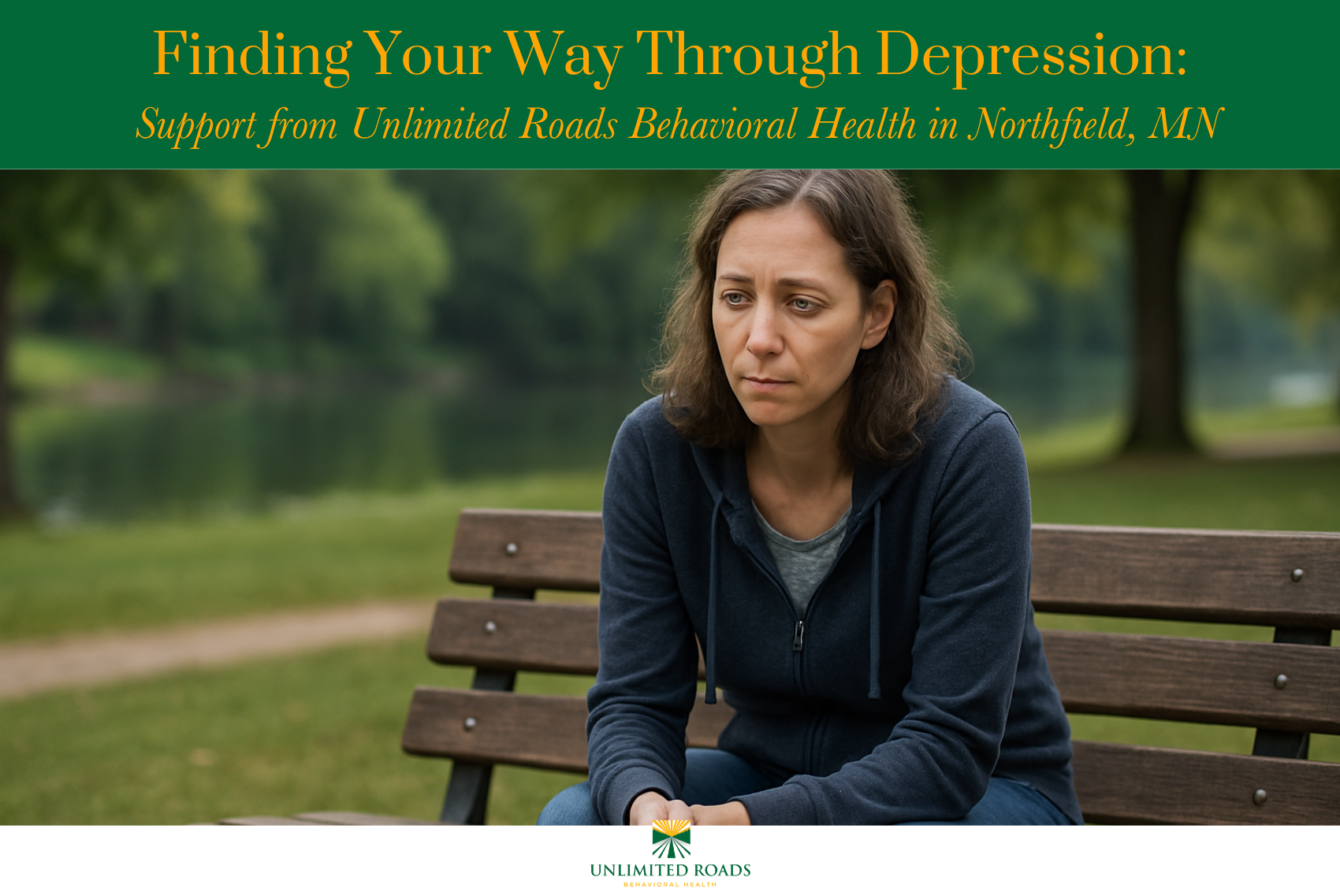
 Depression is more than “feeling sad.” It can color every part of your life—your energy, sleep, relationships, work, and even how you see yourself and the future. If you’re reading this because you or someone you love is struggling, you’re not alone and you’re not “weak” for needing help.
Depression is one of the most common mental health conditions in the United States, affecting tens of millions of adults every year.National Institute of Mental Health+1 The good news: depression is treatable, and many people recover or find real relief with the right support.
At Unlimited Roads Behavioral Health in Northfield, MN, our team is dedicated to helping you find a path forward—one step at a time.
What Is Depression?
Depression (also called major depressive disorder or clinical depression) is a mood disorder that affects how you feel, think, and function day to day. It’s not just a bad day or a rough week. It typically involves a persistent low mood or loss of interest or pleasure, lasting at least two weeks and often much longer.National Institute of Mental Health+1
Depression can range from mild to severe. Some people are able to keep working and taking care of responsibilities, but feel empty or numb inside. Others may feel so overwhelmed that basic tasks—like getting out of bed or taking a shower—feel impossible.
Common Signs and Symptoms of Depression
Everyone experiences depression a little differently, but common symptoms can include:National Institute of Mental Health+1
- Persistent sadness, emptiness, or hopelessness
- Loss of interest or pleasure in activities you used to enjoy
- Changes in appetite or weight (eating much more or much less than usual)
- Sleep problems – trouble falling asleep, staying asleep, or sleeping much more than usual
- Low energy, fatigue, or feeling “slowed down”
- Difficulty concentrating, remembering details, or making decisions
- Feelings of worthlessness, shame, or excessive guilt
- Feeling irritable, restless, or on edge
- Physical symptoms such as headaches, stomach problems, or chronic pain without a clear cause
- Thoughts of death or suicide
If you or someone you love is in immediate danger of self-harm, call 911 or your local emergency services right away, or go to the nearest emergency room. You can also contact the 988 Suicide & Crisis Lifeline in the U.S. by dialing 988.
What Causes Depression?
Depression rarely has just one cause. It’s usually the result of a combination of factors, including:World Health Organization+1
- Biological factors: Changes in brain chemistry or hormone levels
- Genetics: A family history of depression or other mood disorders
- Life experiences: Trauma, loss, major life changes, or ongoing stress
- Medical conditions: Chronic illness, pain, or certain medications
- Substance use: Alcohol or drug use can both contribute to and complicate depression
Whatever the specific causes in your life, depression is not your fault. It’s a health condition, and like any other health condition, it deserves skilled, compassionate care.
When to Seek Help
It might be time to reach out for professional support if:
- Your mood or lack of motivation lasts most of the day, nearly every day, for two weeks or longer
- You’re struggling to keep up with school, work, or family responsibilities
- You’ve withdrawn from friends, family, or activities you used to enjoy
- You’re using alcohol, drugs, food, or other behaviors to cope with your emotions
- You’re having thoughts that life isn’t worth living
Reaching out doesn’t mean you’ve failed—it means you’re ready to feel better.
How Unlimited Roads Behavioral Health Can Help
At Unlimited Roads Behavioral Health, we offer individualized, evidence-based care for depression in a warm, welcoming environment.
1. Comprehensive Assessment
Your journey starts with a thorough assessment. We’ll talk with you about:
- Your current symptoms
- Your personal and family history
- Recent life stressors or changes
- Any medical conditions or medications
This helps us understand the specific shape of your depression and design a treatment plan that fits your needs—not a one-size-fits-all approach.
2. Personalized Therapy for Depression
Our clinicians use research-supported approaches to treat depression, such as:National Institute of Mental Health+1
- Cognitive Behavioral Therapy (CBT): Helps you recognize and change unhelpful thought patterns and behaviors
- Interpersonal Therapy (IPT): Focuses on relationships, communication patterns, and life transitions
- Acceptance and Commitment Therapy (ACT) and mindfulness-based approaches: Help you relate differently to difficult thoughts and feelings while building a life guided by your values
Therapy may focus on:
- Building coping skills and emotional regulation
- Challenging negative self-talk
- Improving communication and boundaries
- Re-engaging with meaningful activities
- Addressing unresolved grief or trauma (when appropriate)
3. Collaborative Care and Referrals
For some people, medication can be an important part of depression treatment. Our team can collaborate with your primary care provider or psychiatrist and—when appropriate—provide referrals to trusted medical partners in the Northfield area.
We believe in team-based care, where your therapist, medical provider, and (when you wish) family members can work together to support your healing.
4. Support for Lifestyle Changes
Research shows that certain lifestyle changes can help reduce depression symptoms and support long-term recovery, especially when combined with therapy.World Health Organization+1 These can include:
- Improving sleep habits
- Regular physical activity, as medically appropriate
- Balanced nutrition
- Stress management and relaxation skills
- Building supportive relationships and healthy routines
Your therapist can help you set realistic goals and make changes at a pace that feels manageable.
Living with Depression: There Is Hope
Depression can make the future look dark and narrow, but that’s the illness talking—not the truth. Many people who once felt completely stuck go on to experience real joy, connection, and purpose again.
You don’t have to travel this road alone. Support, understanding, and effective treatment are available.
Frequently Asked Questions About Depression & Treatment
Q: How do I know if what I’m feeling is “real” depression or just stress?
A: Stress, grief, and sadness are normal parts of life. Depression tends to:
- Last longer (often weeks or months)
- Affect many areas of life at once (work, home, relationships, self-care)
- Come with physical changes, like sleep and appetite shifts
- Make it hard to experience pleasure or hope
You don’t have to “prove” it’s serious enough to ask for help. If your mood is interfering with your life or feels overwhelming, it’s worth talking to a professional.
Q: Can depression go away on its own?
A: Some people do experience improvement over time, especially after a stressor has passed. But many people continue to struggle or experience recurring episodes. Evidence-based treatments—like therapy, medication, or a combination—can help reduce symptoms faster and lower the chance of relapse.World Health Organization+1
Q: What happens in therapy for depression?
A: Therapy is a structured, confidential conversation with a trained professional. At Unlimited Roads Behavioral Health, your therapist will help you:
- Understand what you’re going through and why
- Identify patterns in thoughts, feelings, and behavior
- Develop practical skills to manage symptoms and stress
- Explore relationships, boundaries, and self-esteem
- Create a plan for maintaining progress
You’re always welcome to share feedback about what is or isn’t helping so your treatment stays collaborative.
Q: Will I have to take medication?
A: Not necessarily. Many people benefit from therapy alone, especially for mild to moderate depression. For moderate to severe depression, combining therapy with medication can sometimes be more effective than either one alone.National Institute of Mental Health+1
At Unlimited Roads Behavioral Health, we don’t prescribe medications directly, but we can:
- Discuss how medications typically work
- Answer general questions
- Coordinate with your prescriber or refer you to a medical provider if you’re interested in exploring that option
The decision is always yours.
Q: How long does depression treatment take?
A: It’s different for everyone. Some people notice improvement within a few weeks; others may need several months or longer. Factors include:
- How long you’ve been experiencing symptoms
- The severity of your depression
- Any co-occurring conditions (like anxiety, trauma, or substance use)
- How consistently you’re able to attend therapy and practice new skills
Your therapist will talk with you about short-term goals as well as a longer-term plan.
Q: Do you work with teens, adults, or both?
A: Availability can depend on the specific clinicians on our team at a given time. Please call our office, and we’ll be happy to share current information about which age groups we’re able to serve and discuss options for your family.
Q: Will my information be kept private?
A: Yes. Mental health providers are required by law and ethics to protect your privacy. There are a few specific exceptions—like if there is an immediate risk of harm to you or someone else or certain legal requirements—but these will be explained during your first visit so you know exactly what to expect.
Q: I’m not sure I’m “depressed enough” for therapy. Should I still call?
A: Absolutely. You do not need to hit a crisis point for your feelings to matter. Many people start therapy because they feel “stuck,” overwhelmed, or not like themselves, and they want support before things get worse. If something in you is wondering if it’s time to talk to someone, that’s worth listening to.
Ready to Talk? Contact Unlimited Roads Behavioral Health
If you’re in or near Northfield, Minnesota and are looking for support with depression, we’re here to help.
Unlimited Roads Behavioral Health
600 Professional Dr #8
Northfield, MN 55057
📞 Phone: (507) 879-5002
Whether you’re ready to schedule an appointment or just have questions about how therapy works, your next step can be as simple as making a phone call. Reaching out is a powerful act of courage—and it might be the first step on a new road toward healing and hope.